Be yourself; Everyone else is already taken.
— Oscar Wilde.
This is the first post on my new blog. I’m just getting this new blog going, so stay tuned for more. Subscribe below to get notified when I post new updates.
Ideas worth contemplating!
Be yourself; Everyone else is already taken.
— Oscar Wilde.
This is the first post on my new blog. I’m just getting this new blog going, so stay tuned for more. Subscribe below to get notified when I post new updates.
The abrupt ‘slow-down’ of things to almost snail-pace brought about by the COVID-19 lock down presented me with a lot of time to reflect. This reflection birthed many ideas and potential new projects. However, I felt like my plate was already full with many commitments. I am a husband, a father, a brother, a business owner, a student, chairperson of an Investment club, amongst other responsibilities. It dawned on me that the only way to add on any other significant responsibilities would be to create more time at a point where I felt I couldn’t free up any more time. The only alternative I was left with to create time was the option of waking up earlier than usual. This is an area where I wasn’t doing well because waking up early had been a goal of mine for a longtime but I wasn’t having much success. In trying to solve this dilemma, I came across a book by Robin Sharma called ‘The 5 am Club’ which I found very helpful in designing a good morning routine. In this blog, I try to briefly unpack the key concepts in this book;

The 20/20/20 principle; Robin advises, based on his interaction with high achievers, that to achieve great things, you have to start your day an hour earlier than the average person (5 am), divide the first hour into 3 parts and use it as below;
First 20 minutes, intense exercise
Second 20 minutes, Reflection
Third 30 minutes, growth (invest in yourself- read book, podcast, course, etc.)
This way you maintain your most important possessions, your health, your mind and your soul, which are the basis for any form of effectiveness and success in life.
He then introduces 6 other concepts to motivate you to wake by 5 am and other strategies to increase your effectiveness and success;
A: The Four focuses of history makers
1. Improve upon your natural talents
2. Free yourself from distractions.
3. Master your craft.
4. Build each day’s successes on the last.
B: Habit installation: To create new habits, choose a trigger, a ritual, and a reward. Then, turn your habits into triggers for further habits.
C: The 90/90/1 rule: For 90 days, spend 90 minutes at the start of your day practicing the one most important skill for your field.
D: The 60/10 method: For stellar productivity, work in cycles of 60 minutes of intense focus and 10 minutes of deep rest.
E: Traffic University: Spend your commute learning instead of allowing yourself to succumb to boredom.
F: Weekly design: The things you schedule are the things that will get done, so take 30 minutes every Sunday to design a beautiful week.
I encourage you to pick up this book for yourself, devour it, and consider its recommendations and go ahead to release the inner hero in you.
About 2 weeks ago, while scrolling through my twitter feed, I came across a book recommendation by one finance professional that I follow. The book is titled ‘The Psychology of Money’ by Morgan Housel. I was captured by the title and attracted to read it. However over the past 7 months or so, I have read two other books on personal finances, that is, Straight Forward Financial Growth (SFFG) by Moses Mukisa and Money Won’t Make You Rich by Sunday Adelaja.

At this point, I definitely felt like I had enough financial knowledge and I did not need any more knowledge. On top of this, I am an accountant by training and a certified Business Finance trainer. Still, I felt drawn to this book. So I acquired it and dived in, head first!
What I found out in the first pages of this book was quite profound and mind blowing. The premise of the book is that knowledge and logic are not enough in financial literacy. Knowing what to do and actually doing it are two separate things. Psychology or mindset is the make or break factor in financial stewardship and growth.
For example, the 4 key principles of financial growth in SFFG are Get it, Keep it, Grow it, Give it. Over my working life (over 10 years), I have not been terrible at earning (get it) and being generous (give it). However, where I have not done well has been in the ‘keep it’ part, which is, saving. Even with the knowledge gotten over the last 6 months, the immense benefits I know about saving and how it can accelerate my financial growth, I was still struggling in this area. When I analyzed my life to date, I realized, I have never been a ‘saver’ and that is why I was poor at it, even though I knew the benefits of it. I realized, I was never taught about money at home and we hardly talked about money at home when I was growing up. Earning, spending and giving have never been a problem for me but this wasn’t the case regarding savings.
One profound thing in the book that changed my mindset about money was the fact that saving buys you time or freedom. Because of the uncertain nature of life (none of us know what the future holds), spending all you earn is very risky because no matter how good your projections of future earnings are, there is no guarantee that things will go exactly the way you have planned. Therefore saving ensures that you are not wiped out in case things turn out otherwise regarding your earnings.
He also says that how much you save is more controllable than how much you earn. As the popular saying goes, “a bird in hand is worth two in the bush.”
The revelation that knowledge is not enough in bringing transformation in my financial life was quite profound. I have improved over the last month in my saving and hope it becomes a habit. I realized that for the areas where I am struggling to change despite all the knowledge I have, I need to check my beliefs/mindset/psychology about those things and eliminate any limiting beliefs if I am to have lasting change. This applies both to money and other areas where we seek change and improvement.
Indeed the Bible says in Romans 12:2 “.be transformed by the renewing of your mind.”
About 3 years ago I took an active interest in online Forex trading. For a longtime I had been fascinated by the idea of passive income. According to Investopedia.com, Passive income is “earnings derived from a rental property, limited partnership, or other enterprise in which a person is not actively involved.” The prospect of earning money without being ‘actively involved’ was nothing less than music to my ears. However, much as these online brokers promised good returns, with little effort, i was abit skeptical about risking my money, because about 5 years earlier, many Ugandans had lost lots of money in Forex trading. I therefore decided to take a more cautious foray into this world to better understand the forex market, trading and how it works. This involved taking courses in forex trading, studying the best forex traders and listening to testimonials from active traders. What i learnt was radically different from what most people think Forex trading is, let alone my earlier preconceptions about Forex trading. Needless to say, my research into forex trading taught me lessons that i have found to be applicable in almost all aspects of life. Allow me to share my top lessons from this experience;
The ‘easy money’ myth.
In my study of the consistently top earning forex traders, that is, those who trade for a living and have been doing it for a very long time; i learnt that most had gotten great after experiencing huge failures and near catastrophic losses. These bad experiences forced them to go back to the drawing board and understand the fundamentals of the business they are doing. They are actively involved versus being ‘passively’ involved. That is, they dedicate between 3 hours to 12 hours a day to trading. So for one to think that you can get similar results by ‘passively’ trading would be highly presumptuous.
‘Passive’ income requires more activity than I thought and is not ‘easy’ at all.
Choose a strategy with an edge and stick to it, through thick and thin.
The Forex market is the biggest market and probably the most difficult in the world. Money is made by making the right prediction about where one thinks the market is moving to next and then you put your MONEY where your mouth is. If your prediction is right, the market rewards you, if you are wrong, you are punished.
You therefore have to come up with a strategy with clear rules which helps you predict market movements so you can make the right prediction. After, zeroing in on a strategy, whether yours or copied from another person, you test it with as little money as possible. Only when you get good results, can you then increase your investment. Otherwise you need to change strategy.
Also, a good having a good strategy doesn’t mean that you never experience some failures. Losses can sometimes occur even with a good strategy because of factors outside your control.
Just like any other worthy endeavor in life, a good strategy is one which has way more wins than losses. If you happen to find one and through testing and experience, it is found to deliver good results, stick with it even when going through a dry patch. Few roads are smooth all the way; there are a few speed bumps along the way. As long as your still on course to your destination.
PS; some strategies need reviewing regularly because the environment my change and the conditions that made these strategies successful might have changed. Life is also alike
Money = Certificate of Appreciation.
A few months into my Forex trading journey, I began to experiment with a strategy I had learnt and was preparing to move from a demo environment to a live environment trading ‘real’ money. I however started having second thoughts about proceeding because during my research, I had come to find out the online Forex trading is a Zero-sum game. This means that in all transactions, one’s gain means another person’s loss. That is, every positive value creates a negative value, thus a sum of Zero. This went against the principle of ‘win-win’ that I abide by. I believe that my interactions or transactions with others should create win-win outcomes for both of us. As a result of this, because the other party will get value from transacting with me, he/she will then pay me for the value derived. In appreciation of the value received, my client will then give me money. That is why I refer to money as a certificate of appreciation.
Because online Forex trading is a Zero-sum game, it failed the test of win-win, which is a key value of mine. As a result, I had to abandon it as a source of income but not before extracting valuable life lessons that I never thought I would have gotten from this trade.
There’s a saying which goes like “If you want to hide something from an African, hide it in a book.” While I find this stereotypical and derogatory, I must say, a lot was hidden from me before I fell in love with reading books. Over the past 6 months, my rate of reading has improved greatly. I am currently reading at least 3 books every month and hope to reach the level where I read one book a week; aluta continua!
Picking my 4 favorite books thus far from all the books I have read wasn’t easy, the sieving process was grueling. Also, I have not included the Bible even though I try to read a portion of it on a daily basis. With that said, listed below are the four books that I consider my favorites thus far.
I first encountered Dan Miller’s writings about 8 years ago through his weekly newsletter. As the title of the book suggests, he shows you how to find the work you love within 48days. Statistics of people who are disengaged at work places because they hate their jobs are high. He believes that work that is meaningful, purposeful and yet profitable is possible and shows how any individual can discover and acquire the work they love within 48 days.
Key Takeaways.
It set me on a journey to discover my passion, gifts, skills, personality and values. Armed with this awareness, I was able to figure out which job, service or product business was the right fit for me. I used this knowledge 4 years ago to quit my day job and start my consultancy which helps business owners who are struggling with profitability and growth.
“Your work is going to fill a large part of your life, and the only way to be truly satisfied is to do what you believe is great work. And the only way to do great work is to love what you do. If you haven’t found it yet, keep looking. Don’t settle.” Steve Jobs.

Zig Ziglar is one of the best motivational speakers of all time for me. I came across his podcasts at a time when I was struggling with ‘sticking thinking'(negative thinking) and through his ‘check up from the neck up’ I learnt that ‘You are where you are because of what has gone into your mind. You can change what you are and where you are by changing what goes into your mind.’ Zig Ziglar.
I try to re-read this book at least once every year.
Key Takeaways.
I read this book in a season when I was struggling with self-doubt as a result of certain business failures I had experienced. Some of the memorable quotes from Zig Ziglar in this book that I live by;
“Remember that failure is an event, not a person.”
“You will get all you want in life, if you help enough other people get what they want.”
“If you can’t take a huge step to begin with, take as big a step as you can, but take it NOW”
The central theme of this book is a concept called the Entrepreneurial myth, the popular myths about business versus what running a business actually is. The writer says that most small businesses are started by an employee(technician) who gets an Entrepreneurial seizure after experiencing frustrations with his/her employers and he/she figures that since he/she does the real work, it then makes perfect sense that he/she can start a business doing that work and it’ll succeed. The problem is you don’t only need the technical skills but also Entrepreneurial and Managerial skills to start and run an enduring successful business.
He then goes on to show why the goal for all Entrepreneurs should not be self-employment but business ownership and how you can do that by copying the franchise model of McDonalds which is considered the most successful small business ever.
Key Takeaways.
This book demystified business for me and showed me what it takes to grow a small business into a world class business.
First of all I like the fact that the writer calls it effectiveness and not success was very eye-opening for me. Because, I feel like the word ‘success’ has been abused to mean only material things. The dictionary defines ‘effective’ as ‘successful in producing a desired or intended result.’ In essence, the writer is writing to those who are seeking effectiveness (achieving their desired or intended results) and not ‘mere success’.
Because this book is a whopping 520 pages, I had never read it to the end but thanks to a book club that I joined almost two years ago, I was able to read and discuss it with this group to the end.
Key Takeaways;
The 7 recommended habits for a highly effective life;
* Be Proactive.
* Begin with the End in Mind.
* Put First Things First.
* Think Win-Win.
* Seek First to Understand, Then to Be Understood.
* Synergize.
* Sharpen the Saw (Take care of your Mind, Body and Soul).
Lastly, what I have found out with reading books is that the more books I read and the more knowledge I acquire, the more I realize how much I don’t know. As a result my ‘to read’ list grows longer and longer every day.
Much as this seems like a daunting task, it’s also refreshing to know that I will probably never exhaust all the knowledge out there and thus they’ll always be something new to learn.
“It is the glory of God to conceal a matter, but the glory of kings is to search out a matter.” Proverbs 25:2

Over the past few weeks in Uganda, in all the major forms of media, one of the hottest topics has been in regard to what was seen as Members of Parliament dishing themselves money as part of the COVID 19 supplementary budget. The Speaker of Parliament then retorted that not only parliament should be under scrutiny but the Government too for the even larger supplementary budget that was passed in their favor.
The truth about the substance of the two above incidents is not the subject of this article, but the frequency of these and other scandals is cause for concern for me and many Ugandans. Such scandals and rumors of scandals have of late got me thinking and questioning what all the money we as a nation have squandered through corruption that would have otherwise played a big role in pulling millions of Ugandans out of poverty.
In trying to figure what the root this corruption challenge is and what the lasting solutions are, one word came to mind, ‘Spiritual Capital’! I first came across this concept while I was studying Entrepreneurship at Sinapis Entrepreneur Academy https://sinapis.org/entrepreneur-academy/
However, before I go into what Spiritual capital is all about, here is where we stand as a country. The 2019 Transparency International corruption perception index ranks Uganda at 137th out of 179 countries with a score of 28. This report ranks how corrupt a country is perceived to be in the global market place. Contrast this with Singapore which, on the same index, ranks 4th with a score of 85(which means that it is perceived to be nearly corruption free). This means that Singapore is generally safe for investment of your money because you don’t risk being fleeced by corrupt government officials, fair justice is accessible if you are wronged, etc.
Foreign Direct investment (FDI) and GDP.
The wealth of a nation is usually determined by its Gross Domestic Product. Uganda, with a population of over $40m has a GDP of 31bn (2019) while Singapore with a population of 5.6m has a GDP of $363bn. One of the major reasons Singapore’s economy is 100 times bigger than Uganda’s economy and yet it is 6 times smaller than Uganda in terms of population, is because it attracts more FDI than Uganda. In 2019, FDI inflows into Singapore were worth $73bn while Uganda attracted $1.3bn!
Studies have also shown that a nation’s GDP is highly correlated with how much Foreign Direct Investment it attracts because development requires capital, capital is necessary to fund production in a country from which it can then generate wealth.
Spiritual capital.
So, you may be asking yourself what all this has to do with Spiritual Capital. Ken Eldred, author of ‘God is at Work’ describes Spiritual Capital as the faith, trust and commitment that others will do what is right, not only what is right in their own eyes or what benefits them the most, but what is right in the eyes of God.
In this book, he goes on to explain that cultures in which biblical values are ingrained grow spiritual capital and establish the environment for successful commerce. This is because honesty, service, excellence, respect, commitment, value, trust, loyalty and quality are necessary for successful business. Please note that the above attributes are all biblical values.
It is therefore surprising and disheartening to see that while Uganda has more Bible believing Christians (82%), Singapore (18.8%) as a nation and culture exhibit’s attributes of the Bible more than us.
Using the above example, I find it fair to conclude that if as a nation, we are not TRANSFORMED value-wise as a people, no amount of CHANGE in systems, officials and laws will bring the desired economic transformation.
What can we do to change the course of our nation?
You need three things: Yourself, the Holy Spirit and the gospel.
You have to be willing to be a depositor into the spiritual capital account of your country and be an example for others to follow.
You have to be a conduit through which the Holy Spirit can transform the hearts of men and women around you. Only the Holy Spirit has this power!
You have to be willing to live out the Biblical values of the gospel and also share the good news of the gospel to those around you. Only the gospel can ingrain the Biblical values that lead to a true spiritual capital transformation!
If we do this then our businesses and value chains (customers, suppliers, staff, regulators, etc.) will be transformed. The sectors in which we operate will be transformed, the whole business sphere in Uganda will be transformed and eventually the whole nation.
Let’s go!

The COVID-19 pandemic that has ravaged the world over the last 3 months has not just affected the world’s health but also it’s economy. In Uganda, we have been on lock down since 31 March,but since 18th March, there has been a slow down in activity as the government started restrictions on movement and gatherings. […]
Finding Purpose in the storm. — Worthwhile Musings

The COVID-19 pandemic that has ravaged the world over the last 3 months has not just affected the world’s health but also it’s economy. In Uganda, we have been on lock down since 31 March,but since 18th March, there has been a slow down in activity as the government started restrictions on movement and gatherings.
This has meant that most forms of work, except essential services have taken some sort of hit ranging from mild to severe as cash reserves necessary for paying expenses have dwindled.
My business has also been affected,since my clients have also been affected. My biggest client supplies IT equipment to government and private companies and therefore since his customers are not working, he is therefore not earning new money or collecting debts. This has in turn also affected my cashflows as he is delaying to pay me.
This had started to stress me and in seeking peace, I was reminded of scripture in Matthew 6:25-33Matthew 6:25-34 “Therefore I tell you, do not worry about your life, what you will eat or drink; or about your body, what you will wear. Is not life more than food, and the body more than clothes? Look at the birds of the air; they do not sow or reap or store away in barns, and yet your heavenly Father feeds them. Are you not much more valuable than they? Can any one of you by worrying add a single hour to your life? “And why do you worry about clothes? See how the flowers of the field grow. They do not labor or spin. Yet I tell you that not even Solomon in all his splendor was dressed like one of these. If that is how God clothes the grass of the field, which is here today and tomorrow is thrown into the fire, will he not much more clothe you—you of little faith? So do not worry, saying, ‘What shall we eat?’ or ‘What shall we drink?’ or ‘What shall we wear?’ For the pagans run after all these things, and your heavenly Father knows that you need them. But seek first his kingdom and his righteousness, and all these things will be given to you as well. Therefore do not worry about tomorrow, for tomorrow will worry about itself. Each day has enough trouble of its own.
Christ commands us not to worry about food, shelter or clothing because God has us covered. He gives an example of birds going about their day only caring about what they were created to do without worrying about where their food will come from. If God feeds birds daily, how much more his most precious creation, people.Birds were created to play a specific role in the ecosystem,for example pollination of flowers which produce all sorts of fruit. If that part is not fulfilled, then we have imbalances and nature suffers.In the same way, God has created each of us for a specific purpose on earth that needs to be fulfilled for the puzzle to be complete.
We should therefore make it our life’s goal to find out what that purpose is and determine to go out daily to grow in there and fulfill that purpose for the good of mankind and for the glory of God’s name.
This realisation has given me a new lease of life during this crisis and has set me on a path of growing in my gifts and passions so as to deliver even more value to my chosen market and sphere of influence.
I hope you too are inspired to grow and make contribution your primary goal.
I recently read a book titled A Celebration of Discipline which prescribes 12 disciplines necessary to grow in relationship with God namely;
1. The inward disciplines, that is, meditation, prayer, fasting and study.
2. The outward disciplines; simplicity, solitude, submission and service.
3. The corporate disciplines; confession, worship, guidance and celebration.
My view is that the quality of my life, decision making and relationships is determined by the quality of my relationship to the all-knowing, ever present, all powerful and loving God. This book therefore provides some great and practical tips to help me in this quest of closeness to God which should lead to a more effective life.
In response to the message of this book, I decided it was good to put these principles into practice and integrate these disciplines into my life. But while trying to look at my schedule to create time for these, it quickly became apparent that my time is largely occupied by a plethora of activities. It was especially difficult for the inward disciplines because the outward disciplines are largely attitudes while the corporate disciplines are seemingly already taken care of in the cell group meetings every Wednesday in my community and the Sunday worship service at my church.
In between waking up early to prepare to go to work, snaking through the traffic jam, checking my social media feed, early morning meetings, etc., I then have to create time to meditate, pray, and study the word meaningfully. Please note that many other people add on preparing 2, 3 or more kids for school and driving them there.
Suffice it to say, the world system we live in is set up against these inward disciplines and unless we intentionally fight against this tide, we find ourselves conforming to the standard that we are dealt. Busyness is the hall mark of our lives. The world is moving at an ever faster pace bringing with ever more options in terms of gadgets, apps, income streams and a whole host of other things wrestling with our ever reducing attention span.
However, over the last 3 weeks, due to the COVID-19 pandemic that has rocked the whole world, most of the activities that filled my day have been scaled down due to the lock down imposed by our Ugandan government. These restrictions are not limited to Uganda only but are being applied worldwide. The world system is on lock down! The things that seemed like necessities to us have been scaled down or in some instances shut down, bringing us to the realization of what actually matters in life which for me is summarized by the verse in the bible which says that godliness with contentment is great gain(1 Timothy 6:6).
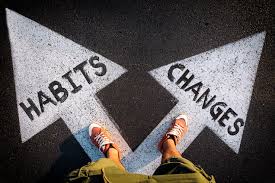
They say it takes 21 days to develop new habits, and so I am hoping that by the end of this lockdown (which will be a total of 35 days since it started), I will have shed the bad habits of sleeping late, waking up late, checking my social media as soon as wake up, etc. and replace them with meditation, prayer, fasting and study.
I hope you too will resolve to replace some bad habits with good ones.
Since mid- January this year, the world has been battling a pandemic that has disrupted life as we know it and have known it for as long as we can remember. In January 2019(exactly one year before COVID-19) while reassuring the country that our debt is still manageable, our finance minister assured us that barring a natural catastrophe (which he highly doubted would occur), the economy was on whhuuuuuu (whistling sound).
Well, it was funny at the time, but it now looks like the natural catastrophe he highly doubted would occur, is upon us (3 months to the end of the financial year) and might disrupt the economy and push us into more debt as a result.
From this I have picked 3 lessons for my own personal finances going forward;
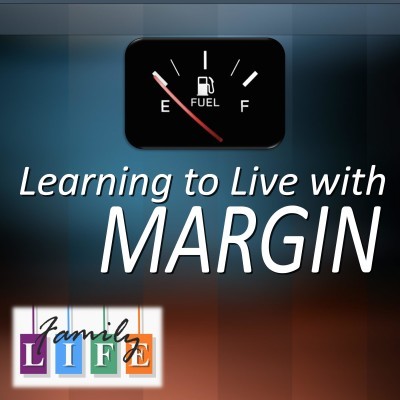
Live with margin because the future is uncertain.
During this time, people have been mainly worried about those who live hand to mouth, that is, if they don’t earn in a day, then they don’t eat. In this category, we have the boda boda riders, taxi (Matatu) drivers, road side vendors, etc. It is assumed that salary earners or the ‘corporate’ class are ‘safe’ and are not in this ‘mere ya leero’ category. I agree that most salary earners don’t fall in this category, but how many would be able to survive month-to-month without a salary? I worry that if the economy and thus employers were affected for an extended period of time, then this category would also be under serious risk. I have thus been asking myself, can I be able to take care of my essential needs if I had a disruption in my monthly income for 3 to 6 months, without borrowing? You can guess my answer but my conclusion is that I need to set up an emergency fund which is liquid and easily accessible to cater for emergencies (unforeseeable events) that arise from time to time. This fund should ideally be minimum 3 months’ worth of essentials (needs) for me and my family. Uncertainty is a constant, yet we live without margin.
SACCOs and Investment clubs are of the essence.
In Kenya, it is mandatory for all Matatu drivers to be in SACCOs. Licenses are issued out through SACCOs. I am assuming therefore, that every Matatu driver has some savings aside. In times like this, this comes in handy. We would not be so worried about our taxi drivers and boda boda riders if we had such a policy for mandatory savings for them also. I suggest it be mandatory because as humans, delayed gratification is a hard. We are more inclined to discount future needs but favor current wants. I believe if this mandatory savings policy also extended to corporates as a check on our consumerism (Ugandans are known as heavy spenders, compared to our Kenyan counterparts), then those savings could cushion us in times of emergencies but then also increase our national savings rate which is key to reducing the cost of capital in the economy.
There is a difference between wants and needs.
In times like these, life is stripped down to the essentials. We quickly see what’s essential and what’s not. At a time when transport is at a halt, bars and restaurants closed, sporting events cancelled and a curfew in place, what we are left with, is what really matters. In the face of an uncertain few months ahead, I have to use my finances sparingly today so that I can hopefully navigate safely the negative effects this crisis will have on our economy in the next coming months.
I am not advocating for hoarding or stinginess in the period during and after this COVID-19, however, I believe this season has been the cure for my occasional dissatisfaction and discontentment.
1 Timothy 6:6-8. But godliness with contentment is great gain. For we brought nothing into the world, and we can take nothing out of it. But if we have food and clothing, we will be content with that.
This (COVID-19) too shall pass and the financial lessons learnt and disciplines developed shall make us better stewards going forward!
Since mid-February when it became apparent that the COVID-19 epidemic was not just a Chinese problem but had morphed into a global pandemic, life as we know it, has not been the same. The two things that brought this reality home for me was the grounding of most flights thus paralyzing international travel and the halting of most sports events. I am a football fan so halting the English premier league, something that had last been done over 70 years ago (world-war 2), was quite a sobering reminder. This situation is unprecedented in our life time.
As is usual with such happenings which put a halt in my routine, I find myself pondering, asking questions and looking for answers. Even though I might not have gotten the answers that I wanted from God (even if He told me why this is happening, I don’t think I would be able to understand as His perspective is much more superior to mine), He has taught me some indelible lessons that will carry me through this and any future crises;
A few minutes ago, I watched a video of one of my favorite musicians speaking about fear. He gave an example of being in a room with Superman and then an intruder comes in. It would be an insult to Superman if you started quaking and wondering what to do in such a situation, with Superman in the room! What that depicts is that you don’t believe Superman has the power to defeat the intruder and that is why you are trembling.
I believe that’s how God feels when we are terrified, paralyzed, worried and complaining in the face of frightening situations. It is said that the command “fear not” appears 365 times in the Bible, one “fear not” for every single day of the year.
In the face of the disruption and uncertainties that now abound due to COVID-19, we need to keep reminding ourselves that Jesus is in the boat and NOTHING is hard or even impossible for Him. He is able to preserve us with his peace in the storm and get us safely to the shore. Feeling fear is inevitable in our human situation, what matters is how we respond when we encounter this feeling/emotion.
The world system we live in is so competitive and fast paced and often times ‘success’ comes down to how much you outwork your competitors. Coupled with the distraction of social media, traffic jams, functions and so many things that are competing for my attention, I feel like God always gets the ‘left overs’ of my time. If I don’t spend quality time with God first thing in the morning, chances are that my interaction with God that day will only be through a 4 minute prayer when am dropping off my wife at her work place. 4 minutes out of a total of 24 hours. During this lock down, with no lengthy commutes to and fro town, no constant beeping of my phone, I’ve had more time for solitude and contemplative prayer and time with God.
I sense that God wants to free me from the trappings of the capitalistic system that I find myself and in so that I can prioritize the things that matter most. Don’t get me wrong, work, hang outs, social media and other things that have been limited by this lock down are not necessarily wrong, but if they come first in my life, the result is an imbalance and a life built on shaky things as this crisis has revealed.
Just when you start to marvel at man’s achievements, his magnanimity and his genius, something happens that shakes our confidence. Are we really in control? An invisible virus (to the naked eye) has the WHOLE world on its knees.
Believers in God are usually considered gullible by those who consider themselves ‘reasonable’ or ‘rational’. In fact, on some TV shows the word ‘God’ is censored. However, while watching news and reading statements from leaders and politicians2000114, I couldn’t help but notice how many times God is now mentioned. In this period, when the things we normally have confidence in are struggling, that is, our economies, jobs , businesses, medical systems, governments; we turn our eyes to that which is greater and unshakable, God.
As I close, I can’t help but feel that because of His nature, as one who loves us, the crown of His creation, He will once again come to our rescue, but not before reminding us who is in charge. Indeed as the old song says, “He’s got the whole world in His hands!”


 Worthwhile Musings